LNEYA Enfriadoras industriales Fabricante Proveedor


What should I pay attention to when adding refrigerant to a water-cooled chiller
In our life, we believe that everyone is
very familiar with refrigeration. In the central air conditioning and
industrial production process cooling industry, small water-cooled chillers is
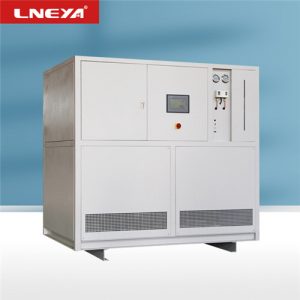
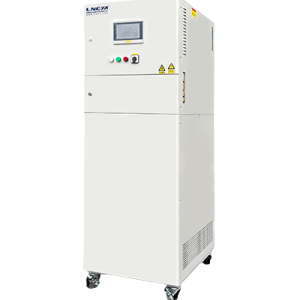
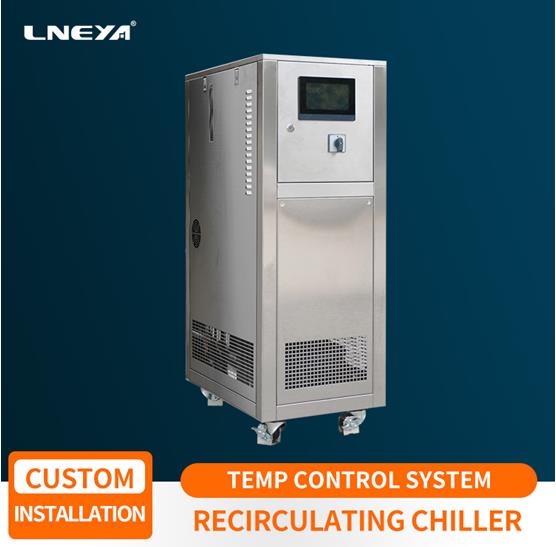
more common. This unit is composed of a compressor in the fuselage, a
horizontal shell and tube condenser, an evaporator, a thermal expansion valve,
and some related parts. Under the cooperation of these auxiliary parts, the
overall small water cooled chiller is compact in structure, convenient in
operation and control, and is popular among the public in the market.
For refrigeration systems that do not have
a high pressure reservoir and a low pressure vapor-liquid separator, the
control of refrigerant charge is particularly important. Because the
refrigeration system is a condenser and also acts as a high-pressure reservoir,
the refrigerant is stored in the condenser, and the condenser is cooled. The
heat dissipation area is reduced and the condensing pressure is increased,
resulting in a decrease in cooling capacity.
For the control of the refrigerant charge
of such small water-cooled chillers, the following methods are followed during
the filling process:
First, touch the temperature of the
condenser casing.
The upper outlet of the condenser outlet is
heated above the outlet, and the outlet below the outlet is cool. (There is a
description of the high temperature exhaust of the compressor in the inside.
The cooling indicates that the small water-cooled chillers is a liquid space.)
Second, look at the inspiratory pressure.
Corresponding to the temperature of the
refrigerant water in the evaporator. (That is, corresponding to the evaporation
temperature.)
Third, look at the compressor return pipe
temperature.
The high-temperature unit return pipe
should be cooled and dew, but it can be dew condensation to the compressor
return valve; the low-temperature unit return pipe should be frosted, but the
frost can be connected to the compressor return valve. If condensation or frost
builds up on the compressor casing, liquid refrigerant will enter the
crankcase, causing the compressor to run back and cause liquid
problem.
The above is a partial analysis of our
LNEYA technicians for water-cooled chillers. Regarding the specific use of our
water-cooled chillers, you can contact us sales@lneya.com for more detailed
instructions.
Recomendaciones relacionadas
-

Puntos de atención para la inspección diaria de equipos de control de baja temperatura a menos 30℃
1586The low temperature control equipment at minus 30 degrees Celsius is a refrigeration unit or also called a refrigeration unit. The difference from the chiller is the temperature range. It is a commonly used low-temperature equipment in the industr...
Ver detalles -
Dispositivos de refrigeración y calefacción para secadores monocónicos
1227El secador cónico simple es un equipo de secado de materiales sólidos de uso común, ampliamente utilizado en las industrias química, farmacéutica, alimentaria y otras. Para garantizar el control de la temperatura durante el proceso de secado, suele ser necesario equipar...
Ver detalles -
Beginning with Refrigeration, Heating and Temperature Control System Product Diversification Develo
1546Wuxi Guanya Refrigeration technology co., ltd was founded in 2006. It set up a refrigeration and heating equipment studio. In 2007, it launched the first generation refrigeration and heating cycle, registered the trademark "LNEYA". In 2008, it lau...
Ver detalles -
Operation Instructions of Heating Cooling Circulator
1704Heating cooling circulator is a process that refrigerant transfers heat from low temperature state to high temperature state, so that its cooling can reach the state of low temperature environment, thus maintaining the low temperature state and re...
Ver detalles