LNEYA Enfriadoras industriales Fabricante Proveedor


Dispositivo de refrigeración de prueba de batería Instrucciones de configuración común del enfriador
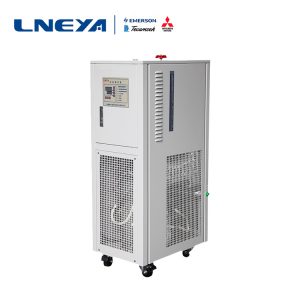
Bajo un uso normal, el dispositivo de enfriamiento de prueba de la batería Chiller necesita ser descubierto a tiempo cuando se produce cualquier parte de la anormalidad. Esto requiere una clara comprensión de la configuración básica de la prueba de la batería dispositivo de refrigeración Chiller. La batería...
En battery test cooling device Chiller shell and tube condenser housing is normally the upper half is warmer and the lower half is warm. Under abnormal conditions, the entire housing is not too hot, and the original refrigerant amount is not enough. In another case, the entire housing is very hot due to insufficient cooling water or poor heat dissipation (scale in the water pipe). Under normal conditions, the casing condenser is very hot. The reason is that the cooling water is too small or the heat dissipation effect is poor. The other is that the outer surface of the casing is not too hot, because the refrigerant amount is insufficient.
Under normal circumstances, the battery test cooling device Chiller suction pipe feels cool and feels dew due to poor heat dissipation in the condenser, high condensation temperature or excessive refrigerant charge. Under normal conditions, the liquid tube is warm. Under abnormal conditions, the liquid tube is hot. The reason is that the condenser has poor heat dissipation, high condensation temperature or excessive refrigerant flow. Under normal conditions, the suction tube feels cool and feels dew. Under abnormal conditions, first, the suction pipe is cold and the dew is too much, so that the casing is exposed to a large area. The reason is that the refrigerant flow rate is too large, the liquid cannot be completely vaporized in the evaporator, and there is a liquid reflux phenomenon.
Battery test cooling device Chiller thermal expansion valve appearance temperature (including electronic expansion valve) Under normal circumstances, the lower half of the expansion valve body is very cool, and there is dew, the refrigerant flow is very dull. Under abnormal conditions, first, the valve body is relatively cold, the surface has more dew, and even frost, the refrigerant has a loud sound (gas flow). The reason is that the filter is blocked, or the refrigerant in the power box leaks, and the valve hole is closed. Under normal circumstances, the outer surface is very cold, and the condensation water drops continuously. The temperature of the inlet and outlet air is large, abnormal, the surface of the evaporator is not too cool, the dew is not much, or there is no condensation, and the refrigerant can be heard. The flowing sound is very loud, and the temperature difference between the inlet and outlet is small.
LNEYA battery test cooling device Chiller is equipped with brand accessories in the configuration, which has certain guarantees in safety and runs more smoothly and efficiently.
The above are the tips and instructions to be used during the use. You need to contact LNEYA when you need to know the device parameters or even the device video. Email address: sales@lneya.com
Recomendaciones relacionadas
-
Análisis de piezas del refrigerador de baja temperatura
1882El enfriador de agua a baja temperatura es un equipo de enfriamiento de agua ampliamente utilizado. Por lo tanto, cuando se utiliza, primero debe entender el principio del enfriador de agua criogénico y sus accesorios, a fin de ejecutar el enfriador de agua criogénico más eficiente....
Ver detalles -

Explicación detallada de la atención a la depuración del sistema de refrigeración de circulación cerrada
1778La preparación del sistema de refrigeración de circulación cerrada antes de la puesta en servicio es una parte importante del proceso de depuración, que puede afectar al progreso de todo el proceso de depuración. En general, se debe prestar atención a la detección de fugas...
Ver detalles -
How to deal with frosting in cryogenic refrigeration systems?
1686If the low temperature refrigeration system has been frosted, believing that some enterprises have met, then how should we deal with such situation? Are there any methods can solve this problem. Today, let's know something about it with LNEYA refr...
Ver detalles -
¿Cómo tratar las fugas de refrigerante del tratamiento de gases residuales orgánicos?
1814En el proceso de tratamiento de gases residuales orgánicos, si se detecta que el refrigerante tiene fugas, se recomienda tratarlo a tiempo. A continuación, LNEYA fabricante profesional de tratamiento de gases residuales orgánicos analiza los conocimientos de tratamiento de gases residuales orgánicos....
Ver detalles