LNEYA Enfriadoras industriales Fabricante Proveedor


What are the common connection methods for industrial chillers?
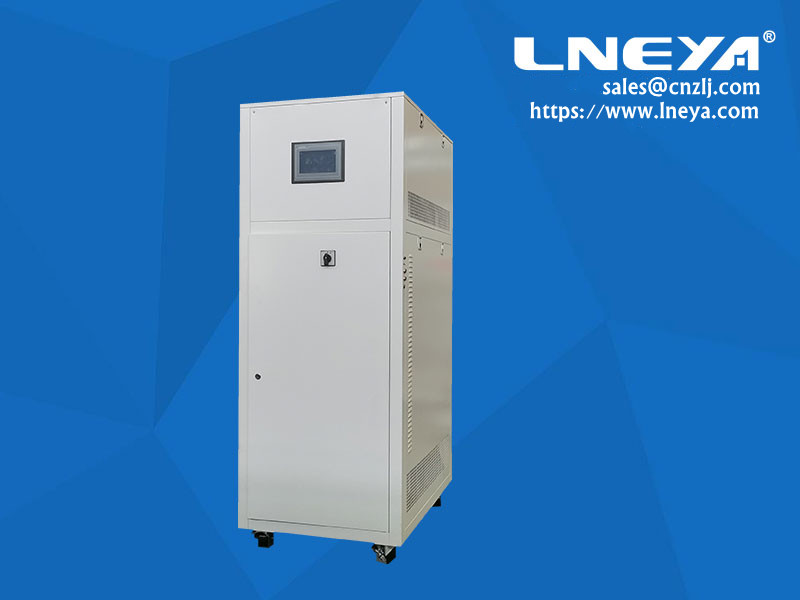
There are several connection methods for industrial chillers, which are suitable for pipe connection under different conditions.
First, welding connection
Welding is the most important and widely used connection method in pipeline engineering. Welding connection is a direct and fixed connection between pipe sections; it is commonly used in large-diameter steel pipes, high-temperature and high-pressure pipes, overhead steel pipes, buried or laid in trenches, etc. . It has obvious advantages such as high strength and tightness of the interface, omission of fillers and joint accessories, fast construction speed, and no limitation of pipe diameter; but it also has the advantages of non-disassembly, complex interface operation technology, and welding equipment and welder cooperation during construction. And other shortcomings.
Second, threaded connection
Threaded connection (also called threaded connection), it is suitable for pipes with small working pressure and small nominal diameter (dn≤32mm), as well as the connection of pipes with threaded valves, instruments, and equipment. When connecting, the joint should be smeared with filler prepared by lead oxide and glycerin, and evenly spread on the thread of the pipe thread (do not apply in the valve), or use PTFE plastic tape as the filler. The filler shall not protrude into the pipe to avoid reducing the pipe. On the end face, it is strictly forbidden to replace the filler with white painted hemp wire, and the wire connection must be tightened once, and shall not be returned or loosened.
Third, flange connection
Flange connection is to add gaskets (materials) to a pair of flange plates fixed on two pipe fittings, and then tighten them with bolts to connect them into a detachable whole. It has high connection strength, good sealing performance, convenient disassembly, and standardization of production. Therefore, it is widely used in equipment connections between pipes and flanged pipe fittings or flange interfaces, pipes and flange valves, and pipes. The location that needs to be disassembled and overhauled. During installation, a rubber plate gasket with a thickness of 4mm should be placed in the notch. The gasket shall not have uneven thickness, bevel or notch.
Resuma
We at LNEYA will make a specific analysis according to the customer’s specific working conditions. If you have equipment requirements or equipment problems, please contact us sales@lneya.com
Recomendaciones relacionadas
-

When to choose TCU temperature control system?
1612First of all, we need to know that the reaction kettle generally needs to carry out the necessary temperature control along with the chemical reaction of the material itself. Through the temperature change of the circulating medium in the jacket ...
Ver detalles -
The importance of car cooling water cycle maintenance
1805Even if the overall running quality of the car cooling water circulation machine is high, if there is no maintenance and maintenance in the specified time, the car cooling water circulation machine may have different degrees of failure. Especially...
Ver detalles -
Las consecuencias de que el refrigerador de tornillo no devuelva aceite y el método de tratamiento
1926En la operación de refrigeración del refrigerador de tornillo, si el refrigerante está en contacto con el aceite lubricante, el aceite lubricante en el compresor entrará en el condensador con el funcionamiento del sistema de refrigeración y el r...
Ver detalles -
Methods for Chiller Manufacturers to Ensure Product Quality
1476Before producing the industrial chiller, the chiller manufacturer will consider the applicable industry, refrigeration capacity, structure, etc., and consider the actual use environment during design and assembly to optimize some functions. In ord...
Ver detalles