LNEYA Enfriadoras industriales Fabricante Proveedor


The solution to the fully enclosed heating and cooling thermostat lack of refrigerant alarm
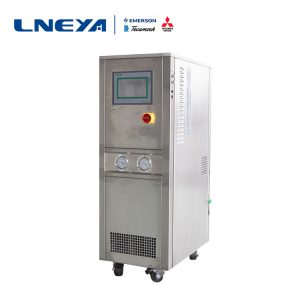
What should I do if the fully enclosed heating and cooling thermostat alarms for lack of refrigerant? I believe that many customers will encounter this problem when they use it. In fact, this is relatively simple. As long as we know the principle of the lack of refrigerant alarm, it can be solved very well. Today I will share two points with you so that everyone will encounter this problem. It can be solved very quickly.

When we encounter a refrigerant shortage alarm in a fully enclosed heating and cooling thermostat, the first thing we have to do is to check to see if the liquid level on the expansion tank of the fully enclosed heating and cooling thermostat is at the normal level, if it expands at this time The liquid level of the fuel tank is lower than the low level, then this alarm is caused by the lack of oil in the system. What we need to do is to add new heat transfer oil in time until the system has a stable pressure and the liquid level of the expansion tank is at the normal level. It can be solved.
There is another situation that will also cause the fully enclosed heating and cooling thermostat to alarm for lack of refrigerant. That is, an alarm occurs after a period of use. At this time, we also need to check the liquid level of the expansion tank. If the heat transfer oil is lower than the low level, there must be a leak in the pipeline, which needs to be found and repaired in time. If it is not the leakage problem, then Most of it should be that the liquid level float switch of the expansion oil tank touches the wall of the expansion oil tank, causing the liquid level switch to not work normally. At this time, we need to remove the liquid level switch and re-reinforce it. The main reason for this situation may be due to The fully enclosed heating and cooling thermostat is caused by slight vibration during use.
The above are two solutions for the lack of refrigerant alarm. The alarm is a fully enclosed heating and cooling thermostat’s built-in protection, mainly to prevent the heating tube from burning dry, so when we encounter this problem, we can solve it in most cases according to the two methods shared by the editor. If it is solved No way to contact LNEYA after-sales technical support.
Recomendaciones relacionadas
-

Analysis of the causes of noise generated by the operation of low temperature chillers
1591Noise is common in the operation of industrial equipment. There are many reasons for noise, which may be caused by some environmental problems in the installation. When noise is generated, we must first confirm the cause and whether it is an inter...
Ver detalles -
La conservación de la energía es crucial para desarrollar enfriadores de recirculación a temperatura ultrabaja
3171With the continuous development of chemical, refrigeration and pharmaceutical industries, environmental pollution is put on the agenda earlier. As an editor of which is the industrial chiller, I can say that except for corresponding to the environ...
Ver detalles -
Cómo prolongar la vida útil del sistema de refrigeración por glicol?
1614Para prolongar la vida útil de su enfriadora de glicol en aplicaciones industriales, preste atención a los siguientes puntos: 1. No utilice anticongelante para automóviles o anticongelante no cualificado. Debido a que este ...
Ver detalles -
Descripción de la tubería de la máquina de calefacción por refrigeración
1731Cuando la máquina integrada de refrigeración y calefacción esté en funcionamiento, el usuario averiguará si la tubería totalmente cerrada afecta al rendimiento general del equipo. La máquina integrada de refrigeración y calefacción LNEYA adopta una tubería totalmente cl...
Ver detalles