LNEYA Enfriadoras industriales Fabricante Proveedor


Precautions for Leakage Inspection of Glycol Chiller
The main points about checking leakage of glycol chiller
During the operation of the glycol chiller, it is critical that the refrigeration system does not leak.
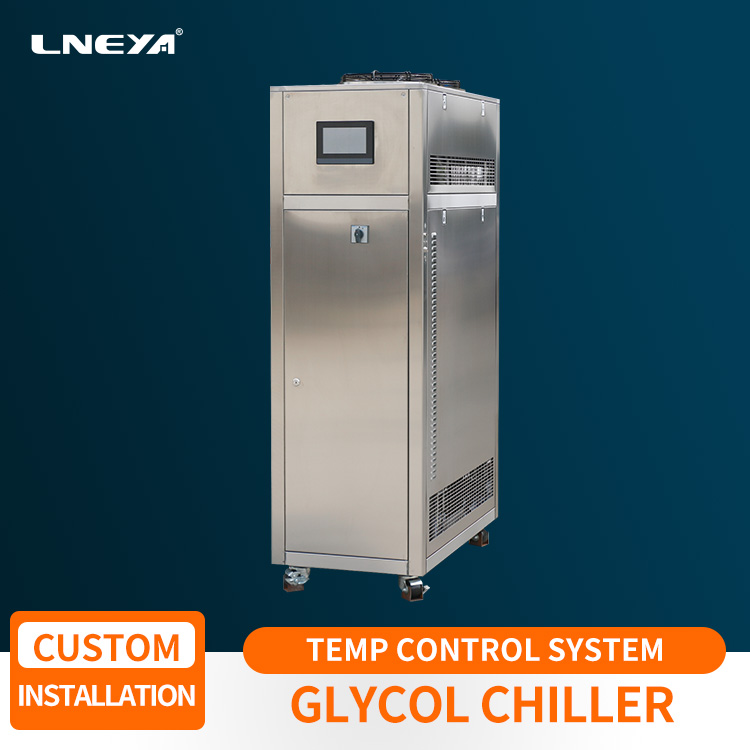
In order to avoid the leakage of refrigerant and other gases from the glycol chiller, the inspection of the welding quality is more important. First check whether the sealing performance of the weld is good. After adding refrigerant or nitrogen and allowing it to stabilize for a certain period of time, it can be tested with soapy water or other methods. When the refrigeration cycle is in operation, the welds should not be cracked due to vibration, the pipes should not be blocked by debris during welding, and should not enter moisture due to improper operation. When the refrigeration cycle is working, the surface of the welded parts should be clean and clean. No oil stains.
The common leakage points of glycol chillers are evaporator leakage, refrigeration cycle connection leakage, refrigeration cycle valve leakage, compressor pipeline leakage, capillary vibration wear, four-way reversing valve leakage, etc. Common inspections Leakage methods are commonly used in the production and maintenance of refrigeration cycles: visual leak detection, pressure leak detection, instrument leak detection, vacuum leak detection, etc. The user can solve the leakage points one by one.
The fault of leak detection of glycol chiller is relatively common. Therefore, when choosing, it is recommended to choose a fully closed loop piping system and valve parts to choose branded accessories. The evaporator uses a high-power plate heat exchanger, which is small in size, high in efficiency, fast in cooling, safe and reliable, and is used for rapid liquid cooling. It is widely used in petrochemical, medical, pharmaceutical, biochemical, freeze-drying, pharmaceutical, military and other high-tech industries.
Recomendaciones relacionadas
-

Aerospace equipment parts cryogenic test freezer refrigeration troubleshooting instructions
1905Cooling water inlet temperature is too low Ultra-low temperature freezer for ultra-low temperature testing of aerospace equipment components As the temperature of the cooling water decreases, the compressor discharge pressure, exhaust temperature,...
Ver detalles -
Finaliza con éxito el Torneo de Bádminton LNEYA 2020
1748In order to enrich employees' spare time, enhance cohesion among employees, create a sunny, energetic and passionate working atmosphere, and demonstrate the company's positive, healthy and upward spirit, LNEYA held the third "Guanya Cup" badminton...
Ver detalles -
Why do chemical raw materials require low-temperature chillers?
1504The main reasons for using low-temperature chillers in the production process of chemical raw materials are as follows: Temperature control: Many chemical reactions are temperature sensitive and require precise temperature control to...
Ver detalles -
La unidad de refrigeración de etilenglicol irrumpió con fuerza y creó la marca LNEYA en 12 años
2031Performance enhanced positioning When performing the cooling and heating reaction, in many cases, the refrigerant cannot cool the object to be cooled by itself. Therefore, we need a coolant (or refrigerant) to cool the refrigeration system in a re...
Ver detalles