LNEYA Enfriadoras industriales Fabricante Proveedor


From what aspects should we consider the use of circulating coolers?
Circulating coolers are a popular choice for temperature-critical applications because they provide stable temperature control, constant flow and constant pressure control. Many process heating systems require cooling and heating. For example, many conveyor heating zones have cooling zones. Injection molding requires a lot of heat dissipation. And the reactor is usually jacketed with cold water. There are many ways to cool this type of system, including tap water, tower water, building chilled water, and circulating coolers.
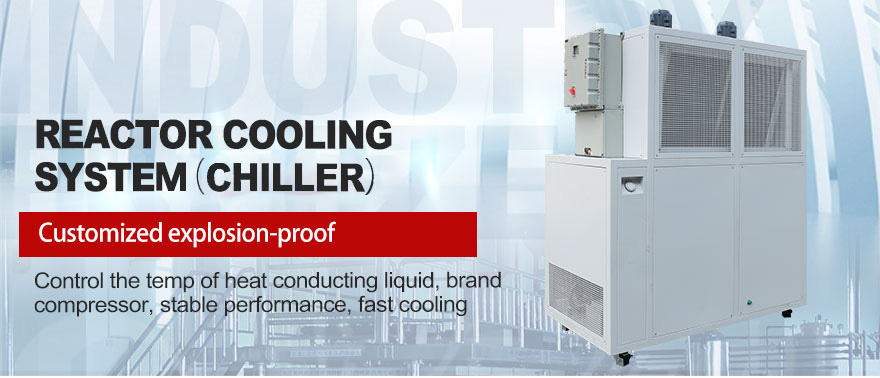
Circulating coolers are a popular choice for applications with strict temperature requirements. They provide stable temperature control-usually within 0.1°C, and provide constant flow and constant pressure control. They can be cooled to below ambient temperature, and when equipped with a heater, they can be kept above ambient temperature.
There are a variety of recirculating cooler products in the industry, manufacturers and options to choose from, choosing the right system for your application can be a challenge. However, there are three main considerations:
First, you need to define basic cooler requirements, such as capacity, coolant temperature, coolant and flow rate. Second, you need to determine which additional options are needed, such as heaters, auto-start functions, filters, alarms, and communication functions. Finally, you should consider other details such as noise level, size, warranty, and after-sales service and support.
Coolant flow and pump options. Most chiller manufacturers offer a choice of pumps with chillers. Positive displacement pumps are popular because they provide constant flow regardless of the pressure drop across the system. One of the disadvantages is that they need to be replaced regularly. Centrifugal pumps have a longer service life, but because the flow rate depends on the pressure drop across the system, they may not be suitable for applications with high pressure drops. Turbo pumps have the reliability of centrifugal pumps, but can provide greater pressure drop. To choose the right pump, you first need to consider the required flow rate and pressure drop in the system. Then, if there is more than one type of pump that meets your requirements, you should choose based on factors such as maintenance and cost.
Choose the right coolant. Most standard models of chillers can treat ordinary distilled water or tap water as a coolant. It may be necessary to add additives such as algaecides to prevent algae growth. For set points below 10°C, it is recommended to use a mixture of glycol and water to lower the freezing point of the fluid. (Another advantage is that adding glycol can inhibit corrosion and algae.) Using a mixture of glycol and water will affect the cooling capacity of the cooler because it does not transfer heat like pure water. If your application requires, most chiller manufacturers also provide options for deionized water and high-purity application systems.
When choosing a cooler, some other considerations may be important for your application. If people are going to work near the chiller, you may need to consider the level of noise it generates, as this will vary between manufacturers.
(The above content comes from network data, if you have any questions, please contact to delete.)
Recomendaciones relacionadas
-

What are the main points for regular maintenance of the recirculating chiller?
1476Recirculating chillers are used frequently in the industry, and the heat generating parts of various devices require recirculating chillers, so operating efficiency is very important. During the running time of the recirculating chiller, it is nec...
Ver detalles -
Hot and cold rapid temperature change test chamber common fault
1637In the high-temperature test of the hot and cold rapid temperature change test chamber, once the temperature change does not reach the test temperature value, in this case, the electrical system can be inspected and the faults can be eliminated on...
Ver detalles -
Instrucciones de mantenimiento del frigorífico de ciclo cerrado LNEYA
1623Los frigoríficos de ciclo cerrado LNEYA deben empezar a prestar atención a sus trabajos de mantenimiento después de mucho tiempo de uso, entonces ¿cómo realizar los trabajos de mantenimiento? ¿Cómo realizar los trabajos de mantenimiento? De acuerdo con el entorno de uso específico y la frecuenci...
Ver detalles -
How to install -60°C cryogenic chiller manufacturers equipment
1986-60℃ cryogenic chillermanufacturers are used in the refrigeration and chemical industry, so whatissues should be paid attention to during installation? LNEYA professionalmanufacturers tell you that you should install according to the instructio...
Ver detalles