LNEYA Enfriadoras industriales Fabricante Proveedor


What should I do if there is noise from industrial cooling and heating chillers?
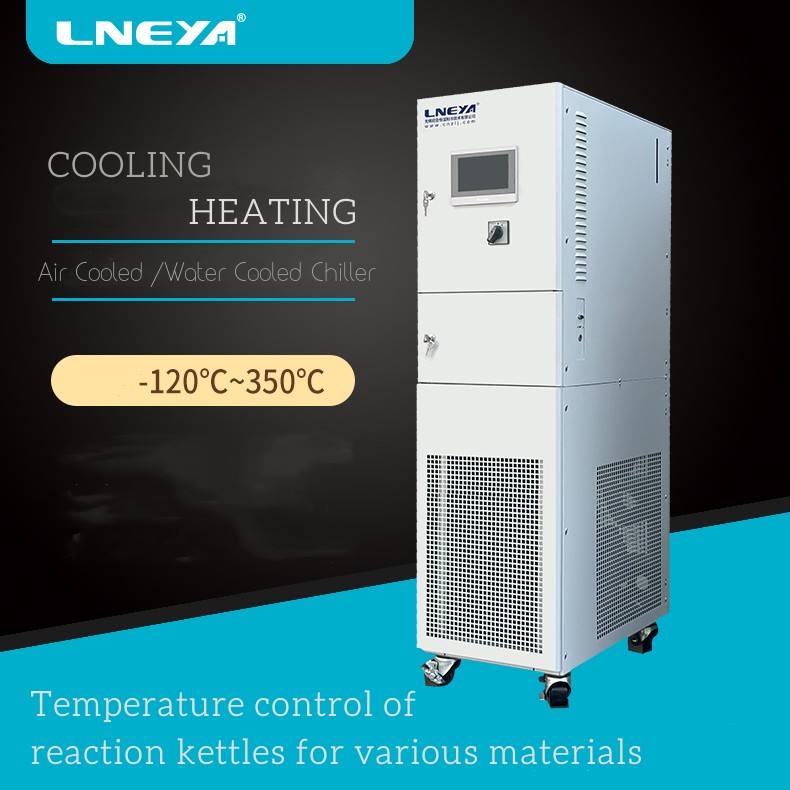
The industrial cooling and heating temperature control equipment adopts a PID algorithm temperature control system to accurately adjust the temperature based on the detected temperature and the set temperature value, improving the drawbacks of traditional manual control of the reaction kettle.
1. The industrial cooling and heating temperature control equipment, the chiller circulating pump, converts electrical energy into mechanical energy to promote the liquid phase circulation of the heat transfer oil, and transfers heat to the reaction kettle. The heat transfer oil exchanges with the materials in the reaction kettle and then returns to the oil heater, where it is heated again under the pressure of the pump and enters the next cycle. Through repeated cycles, heat is transferred and transported, heated and cooled, or the temperature of the reactor is maintained to meet the temperature requirements required by the production process.
2. When high noise occurs during the operation of the industrial cooling and heating temperature control equipment, the chiller needs to be inspected and promptly addressed if any problems are found. The internal components of the industrial grade cold and hot temperature control thermostat are excessively worn, such as the wear and tear of the cylinder body and valve plate of the plunger pump, as well as the wear and tear of the matching parts between the plunger and the plug hole, causing serious internal leakage in the pump. When the pump outputs high-pressure and low flow oil, flow pulsation will occur, causing high noise.
3. The pump valve plate is also one of the important components that can easily cause noise. Industrial cooling, heating, and temperature control equipment. During use, the water chiller may shorten the unloading groove and change the unloading position due to surface wear or oil sludge deposition at the opening of the unloading groove, resulting in oil trapping and higher noise.
4. When air is mixed into the cold water oil of industrial cooling and heating temperature control equipment, it is easy to form cavitation phenomenon in its high-pressure zone, which spreads in the form of pressure waves, causing oil oscillation and causing cavitation noise in the system.
Recomendaciones relacionadas
-

Puntos de Atención en la Utilización de Enfriadores de Recirculación para Equipos de Destilación
1808El enfriador de recirculación es un equipo de destilación de apoyo, que separa diferentes mezclas vaporizando y condensando varias veces. Se puede utilizar bien con el equipo de destilación, que no sólo puede mejorar su eficienci...
Ver detalles -
Knowledge Sharing Of Chiller Selection And Maintenance
1751Chillers can be used in a lot of industry, but who is the better low temperature chiller manufacturer in top chiller manufacturers?Let me tell you. The choice of own model and the maintenance are also very important. Next, see with me. 1. Range of...
Ver detalles -
Condiciones ambientales para la instalación de enfriadoras por aire
1674Como todos sabemos, la instalación de la mayoría de las máquinas debe adaptarse al entorno y las condiciones. Por supuesto, nuestras enfriadoras industriales por aire no son una excepción. Si el enfriador refrigerado por aire no se instala por primera vez, traerá un montón de...
Ver detalles -
Análisis de causas del efecto de enfriamiento deficiente de la enfriadora por agua
1460Las enfriadoras de agua se utilizan cada vez más en todos los ámbitos de la vida. Su función principal es suministrar agua refrigerada industrial para equipos o productos. El rango de temperatura del agua puede ajustarse en función de las necesidades del usuario, y...
Ver detalles