 LNEYA Enfriadoras industriales Fabricante Proveedor


Cómo elegir la mejor enfriadora para un sistema de reactor de 20 litros
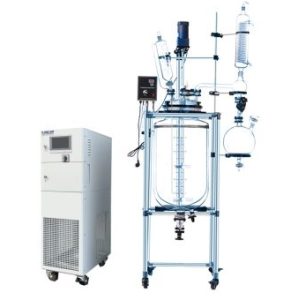
20L reactor systems are commonly found in laboratory R&D, small-scale, and pilot-scale experiments. Temperature control of the reactants within the reactor impacts reaction efficiency, product quality, and the safety of equipment and personnel.
Chillers are common reactor accessories, helping to precisely control reaction temperatures. This article explains the temperature control requirements and key selection parameters for a 20L reactor chiller. It also compares the pros and cons of various chiller types to help you choose the optimal solution for your application.
Temperature Control Requirements for 20L Reactor Systems
A 20L reactor may be small, but in some exothermic or endothermic chemical reactions, the amount of heat within it fluctuates dramatically. Therefore, a chiller is essential to regulate the reaction temperature, preventing both overheating and reaction slowdown caused by low temperatures. A chiller that meets the temperature control requirements of a 20L reactor should have the following characteristics:
• Stable temperature control with minimal output temperature fluctuation.
• Quickly respond to temperature changes in the reactants, eliminating temperature overshoot and temperature lag.
• Suitable operating temperatures for both low and high temperatures. Well-sealed and equipped with safety devices, some applications require explosion-proof chillers to ensure equipment and personnel safety.
Key Parameters for Chiller Selection
When selecting a chiller for a 20L reactor system, consider the following parameters:
Capacidad de refrigeración
Cooling capacity is a key parameter to consider when selecting a chiller. It represents the device’s ability to remove heat. The cooling capacity required for a 20L reactor depends on the reaction type, the amount of heat released, and the ambient temperature. It’s important to estimate the maximum heat release based on the reactor’s heat load , and allow for some margin to prevent the chiller from operating at full capacity for extended periods or malfunctioning under abnormal heat loads. Based on our experience in customer selection, a 20L reactor requires a cooling system with a cooling capacity range of 2-10kW. The specific value should be determined based on the actual heat load.
Temperatura
Different reactions release different amounts of heat and require different optimal temperatures. The reactants in a 20L reactor may need to be cooled from ambient temperature to 0°C or even lower, or heated to over 100°C. Therefore, the chiller’s temperature range should be determined based on your actual operating conditions. We generally recommend customers choose a chiller with a temperature range 5°C wider than the actual maximum and minimum operating temperatures and capable of rapid temperature changes.
Coolant Type
The type of coolant affects both heat transfer efficiency and the operational stability of the equipment. This is because different coolants have significantly different physical properties at different temperatures. Furthermore, some coolants can react chemically with certain materials, potentially affecting equipment operation.
Common coolants include water, glycol-water mixture, and thermal oil. Water has a freezing point of 0°C and is therefore not used in low-temperature chillers to prevent freezing. Glycol-water mixture is generally used in chillers above -40°C. Thermal oil is well-suited for high-temperature conditions, but it is also expensive. Coolant selection should be based on the operating temperature and cooling system materials.
Flow Rate
Coolant flow rate affects heat transfer efficiency and system response speed. Too low a flow rate prevents the coolant from fully removing heat from the reactants, while too high a flow rate can increase pipeline pressure and damage the jacket. To ensure smooth operation of the cooling system, the flow rate must be adjusted to the optimal value.
Temperature Control Precision and Responsiveness
Temperature control accuracy significantly affects reaction stability. Modern chillers generally use PID control systems and multiple Pt100 sensors, achieving accuracy of ±0.1°C or even higher (LNEYA semiconductor chillers can achieve ±0.02°C). Response speed is crucial for the ability of the coolant outlet temperature to adjust promptly to the reactant temperature.
Comparison of Different Chiller Types
There are many types of chillers, categorized by condensation method, application scenario, and function. Common equipment used for 20L reactor systems is primarily the following:
Industrial Air-Cooled Chillers
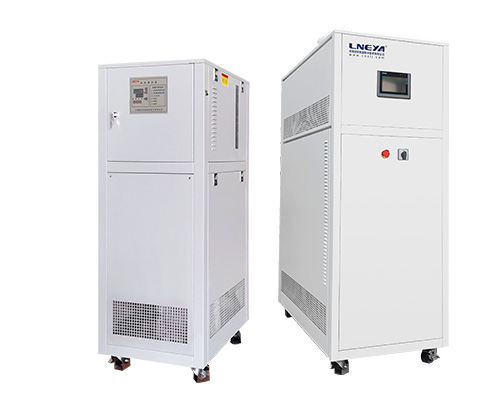
The condenser of an air-cooled chiller is fan-cooled, dissipating heat directly into the air. It eliminates the need for auxiliary cooling water piping. Therefore, it has a small footprint and is easier to install. It is well-suited for installation in laboratories or small workshops. It is also more cost-effective than a water-cooled system, making it a good choice for cooling a 20L reactor.

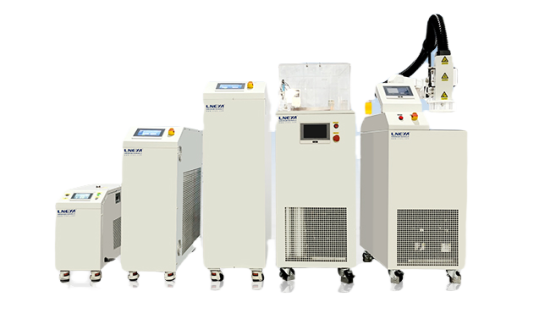
Enfriadores de semiconductores
Semiconductor chillers are commonly used in processes such as wafer fabrication, chip testing, and ion implantation, but their use is not limited to the semiconductor industry. Its high temperature control accuracy and fast response speed make it suitable for processes requiring stringent temperature requirements. Available in a wide range of performance and sizes, it’s a good choice for reactions in your reactor requiring strict temperature control.
Chiller heaters
Chiller heaters offer both cooling and heating functions, making them ideal for reactions requiring temperature cycling or rapid ramping. Some units also feature a temperature profile function, allowing you to set ramp times and rates. The unit automatically adjusts the output temperature based on this profile. This feature ensures consistent results for every reaction.
Practical Considerations and Recommendations for Model Selection
Besides the above equipment parameters, what else should you consider when purchasing a reactor chiller?
Budget and Cost-Effect
Different budgets offer different equipment configurations. You need to balance chiller performance and coste to select a chiller that meets your reaction requirements while being economical. If you’re unsure how to choose a configuration within your budget, a chiller manufacturer can provide professional design assistance.
Size and Installation Space
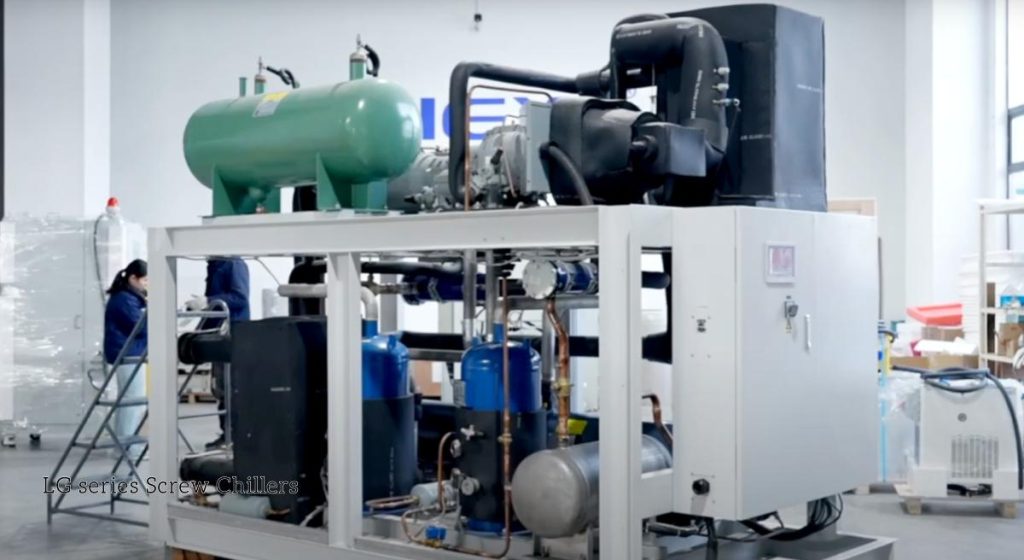
The reactor’s operating environment determines the size and type of chiller. For smaller laboratories, air-cooled chillers are more advantageous. For larger workshops, enfriadoras de agua offer higher cooling efficiency.
After-Sales Service and Spare Parts
The average lifespan of a chiller is about 10 years, during which it will undergo frequent maintenance and spare parts replacement. Without reliable after-sales service and technical support, you could run into numerous problems. Therefore, when choosing a chiller for your 20L reactor, choose a reputable brand with a comprehensive after-sales process and the ability to provide spare parts.
User Reviews
Peer feedback on chillers is more valuable. If a chiller supplier lacks experience providing chillers for your application, they will struggle to fully consider the challenges you may face in real-world conditions and will be unable to design and produce cooling equipment suitable for your reactor.
Conclusión
Although a 20L reactor system is smaller, it still requires a precise and stable temperature control system. LNEYA maintains long-term partnerships with numerous pharmaceutical and chemical companies and has extensive experience in customizing reactor chillers for a variety of applications, including new drug synthesis, pilot production, API preparation, formulation testing, and material synthesis. We have extensive design and production experience.
Contact us to customize a cooling system tailored to your unique application.

Blogs recientes
- What Does a 200 Ton Chiller Cost
- Temperature Control in Photolithography
- Is a Used Chiller a Good Idea
- Chiller Components and Refrigeration Fundamentals Guides
Catálogo
- diciembre 2025
- noviembre 2025
- octubre 2025
- septiembre 2025
- agosto 2025
- julio 2025
- junio 2025
- mayo 2025
- marzo 2025
- febrero 2025
- enero 2025
- diciembre 2024
- noviembre 2024
- octubre 2024
- septiembre 2024
- agosto 2024
- julio 2024
- junio 2024
- mayo 2024
- abril 2024
- marzo 2024
- febrero 2024
- septiembre 2023
- julio 2023
- junio 2023
- mayo 2023
- enero 2023
Etiqueta
refrigerador por aire enfriadora Instalación de enfriadoras Chiller Maintenance chiller refrigerant refrigeradores Montaje en frío Congelador enfriador de refrigeración refrigeración calefacción cooling system sistema dinámico de control de la temperatura chiller de bajo consumo energético enfriador a prueba de explosiones congelador circulador de calefacción enfriadora industrial enfriadoras industriales refrigeración industrial congelador industrial frigorífico industrial reactor de camisa refrigerador de laboratorio refrigerador de baja temperatura noticias enfriador de aceite enfriador de proceso enfriamiento de procesos reactor enfriador refrigeración del reactor refrigeración del reactor calefacción reactor calefacción refrigeración circulador refrigerado refrigerador de tornillo enfriador de semiconductores enfriador de pruebas de semiconductores sundi tcu control de temperatura cámara de pruebas termostato refrigerador de ultra baja temperatura enfriador de pruebas de vehículos enfriador de agua refrigerador por agua
Póngase en contacto con nosotros
Enfriadores relacionados


CONTÁCTANOS
TEL:
EMAIL:
WeChat & WhatsApp:

Wechat QR

¿Tiene alguna pregunta o necesita un presupuesto? Complete el formulario a continuación y nuestro equipo se pondrá en contacto con usted en 24 horas.

