 LNEYA Enfriadoras industriales Fabricante Proveedor


Why Reactor Systems Need a Chiller
If you’ve ever worked with reactors—whether in chemical manufacturing, pharmaceuticals, or R&D—you already know one thing: temperature control isn’t just helpful, it’s non-negotiable.
Reactions don’t care if your setup is perfect. They just do what chemistry tells them to do. Heat builds up. Temperatures spike. And if you’re not managing it carefully, you’re going to run into problems. Big ones. That’s why every reactor setup should be paired with a reliable chiller—not as an afterthought, but as part of the core system.
Controlling Heat is Controlling the Reaction
Here’s something that’s easy to overlook: chemical reactions don’t just need the right ingredients—they need the right temperature, all the way through.
Some reactions release heat. Others need heat to keep going. Either way, if the temperature starts drifting—even by a little—you can end up with something very different than what you intended.
It could be a shift in yield. Or an unexpected byproduct. Sometimes you don’t even notice until your final QC test fails. That’s frustrating.
This is where chillers come in. Not water baths. Not tap water loops. Real chillers—built to keep the temperature exactly where you want it, even if the room temperature swings 10 degrees or more. You set the target. The chiller holds it. No guesswork, no surprises.
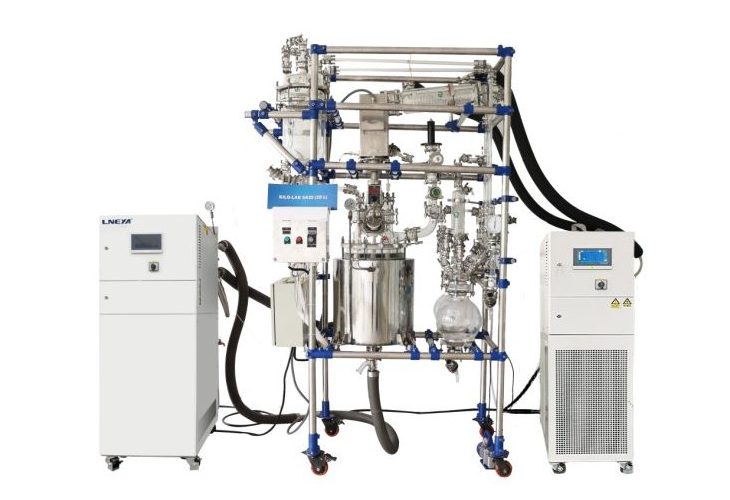
Heat Can Turn on You—Fast
A lot of people new to process chemistry underestimate just how fast things can go sideways.You might be running what looks like a stable reaction—then suddenly the temperature jumps. Maybe it’s exothermic. Maybe your cooling system lags. Now the pressure’s rising, your alarms are going off, and you’ve got more than just a ruined batch on your hands.
The scary part? This doesn’t just damage product. It can put people in danger.A well-chosen chiller helps by pulling excess heat out right when it shows up—not after. And the good ones come with built-in dispositivos de seguridad: alarms, shutdown protocols, smart diagnostics.
You don’t think much about those when things are fine. But when something slips, you’ll be glad they’re there.
Get More Done, in Less Time
Every time your process has to heat up or cool down, it takes time. If you’re using a basic cooling setup, that wait can stretch way longer than it needs to. Let’s say you need to drop from 70°C to 10°C before the next step. Waiting 45 minutes for that to happen? That’s lost production time.
With the right chiller, those transitions are quicker and cleaner. Some units even switch between heating and cooling, which makes temperature cycling much easier—especially if you’re running multi-phase reactions.
Less waiting around means more batches per shift. And fewer manual adjustments means fewer chances for error.
Matching the Right Chiller to the Right Reactor
It might sound obvious, but it’s surprising how often it gets missed: not every reactor needs the same kind of cooling setup.
Let’s say you’ve got a large stainless steel reactor with a big jacket—something industrial, maybe in a pilot plant. That’s a very different beast compared to a small-scale glass reactor sitting in a lab hood. They don’t just differ in size. They hold heat differently, respond to temperature changes at different speeds, and place very different demands on a chiller.
So how do you figure out what kind of cooling system you actually need?Well, start by looking at the reactor itself. How much volume are you dealing with? Is it a high-viscosity material? Are you doing long, slow syntheses—or fast, high-energy reactions? Then ask: what’s the thermal load going to be? Are you pulling heat out slowly over time, or do you need the chiller to react fast to sharp spikes?
And don’t forget the cooling fluid. Are you running plain water through the jacket, or do you need glycol, silicone oil, or something else entirely to hit those sub-zero targets?
The truth is, some processes just won’t run right without precision. Crystallization’s a big one. Solvent recovery’s another. In both cases, if you’re not hitting your low-temp marks—maybe -20°C, -30°C, sometimes colder—your yield and purity can tank. You can’t fake it with a general-purpose unit.
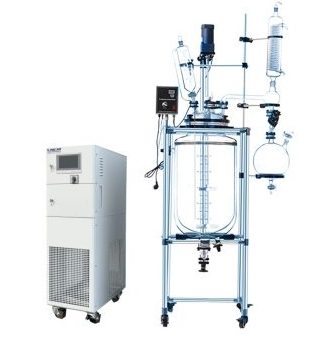
Temperature Swings Can Wreck More Than Just a Batch
There’s also a long-term issue people don’t always think about: thermal stress.It doesn’t take a catastrophic failure to cause real damage. If your system is heating and cooling too fast—over and over—you’re slowly grinding away at your own equipment.Glass starts to microfracture. Gaskets harden and shrink. Enamel lining can start flaking at the seams. Even stainless vessels take a beating when the temp shifts are sharp enough.
None of this might show up in your first few runs. But give it a few months? You’ll see. Leaks. Pressure loss. Sudden seal failures that make you cancel a production run.
That’s why controlled temperature ramping is more than just a “nice feature.” It keeps the whole process smoother—not just chemically, but mechanically. Pumps, valves, tubing—all of it lasts longer when you avoid putting it through thermal whiplash every shift.
Ready to Find the Right Chiller for Your Reactor?
LNEYA specializes in high-precision reactor chiller systems designed for pharma, chemical, biotech, and materials R&D. Get in touch today—our engineers are here to help you design the most efficient temperature control solution for your process.

Blogs recientes
- What Does a 200 Ton Chiller Cost
- Temperature Control in Photolithography
- Is a Used Chiller a Good Idea
- Chiller Components and Refrigeration Fundamentals Guides
- Chiller Types and Selection Guides
- How Does a Peltier Cooler Work
- Peltier Chiller vs. Compressor Chiller
- What Is a Peltier Chiller
Catálogo
- diciembre 2025
- noviembre 2025
- octubre 2025
- septiembre 2025
- agosto 2025
- julio 2025
- junio 2025
- mayo 2025
- marzo 2025
- febrero 2025
- enero 2025
- diciembre 2024
- noviembre 2024
- octubre 2024
- septiembre 2024
- agosto 2024
- julio 2024
- junio 2024
- mayo 2024
- abril 2024
- marzo 2024
- febrero 2024
- septiembre 2023
- julio 2023
- junio 2023
- mayo 2023
- enero 2023
Etiqueta
refrigerador por aire enfriadora Instalación de enfriadoras Chiller Maintenance chiller refrigerant refrigeradores Montaje en frío Congelador enfriador de refrigeración refrigeración calefacción circulador refrigeración calefacción cooling system sistema dinámico de control de la temperatura chiller de bajo consumo energético enfriador a prueba de explosiones congelador circulador de calefacción enfriadora industrial enfriadoras industriales refrigeración industrial congelador industrial frigorífico industrial reactor de camisa refrigerador de laboratorio refrigerador de baja temperatura noticias enfriador de aceite enfriador de proceso enfriamiento de procesos reactor enfriador refrigeración del reactor refrigeración del reactor calefacción reactor calefacción refrigeración circulador refrigerado refrigerador de tornillo enfriador de semiconductores enfriador de pruebas de semiconductores sundi tcu control de temperatura cámara de pruebas termostato refrigerador de ultra baja temperatura enfriador de pruebas de vehículos enfriador de agua refrigerador por agua
Póngase en contacto con nosotros
Enfriadores relacionados


CONTÁCTANOS
TEL:
EMAIL:
WeChat & WhatsApp:

Wechat QR

¿Tiene alguna pregunta o necesita un presupuesto? Complete el formulario a continuación y nuestro equipo se pondrá en contacto con usted en 24 horas.

